

Forever Unwavering
Conservation detection dogs protect wild places around the world by tracking wildlife migration patterns, invasive plants, and even helping with anti-poaching efforts. Ruffwear is a proud partner of Rogue Detection Teams, who have given new life to countless rescue dogs. This organization purposefully seeks out “un-adoptable” shelter pups whose boundless energy and high drive make them excellent candidates for this line of work. While they may be seen by some as “rogues,” it’s exactly these misfit qualities that make them perfect for detection. Another partner, Working Dogs for Conservation, operates in 15 countries around the world, including Zambia where dogs help local game scouts track poachers, playing a crucial role in protecting Zambia’s biodiversity.
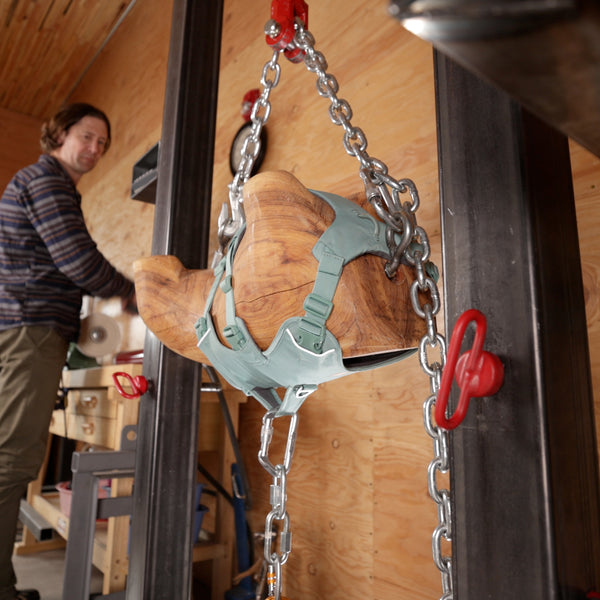
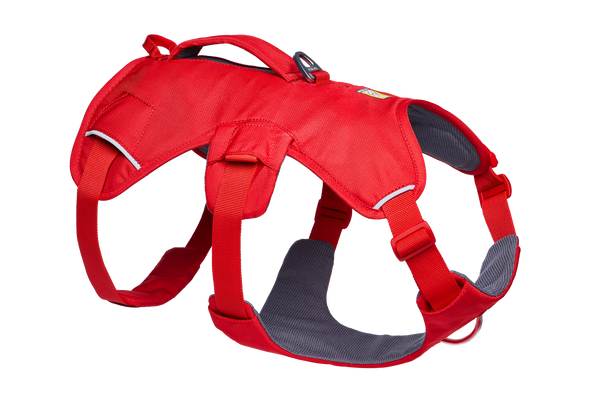
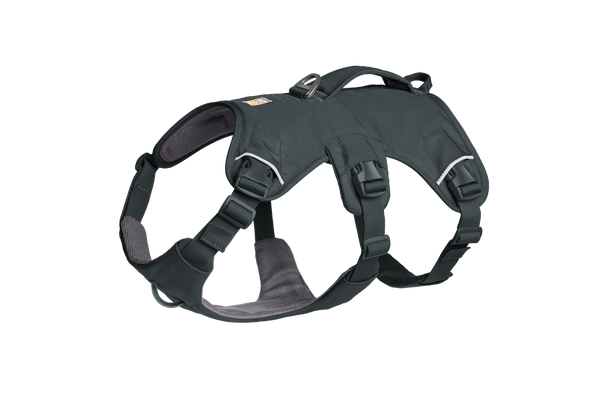
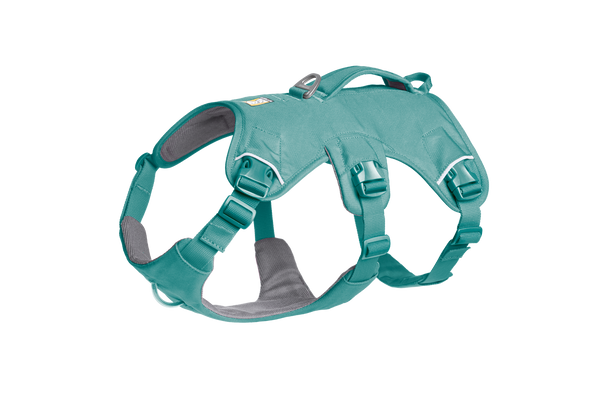
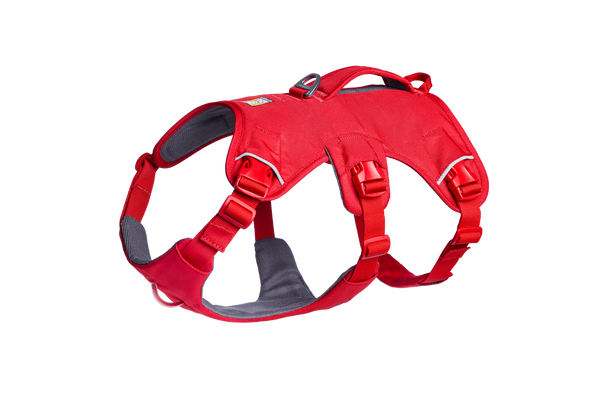
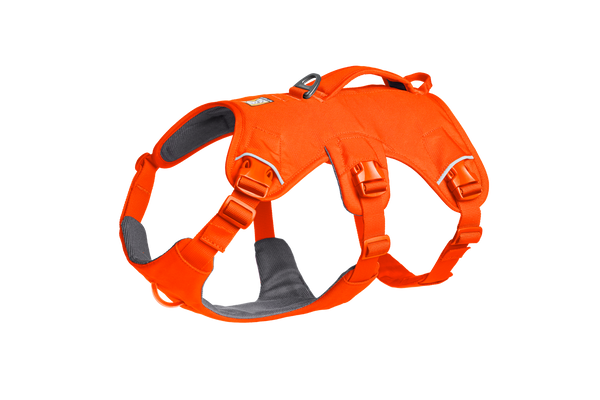
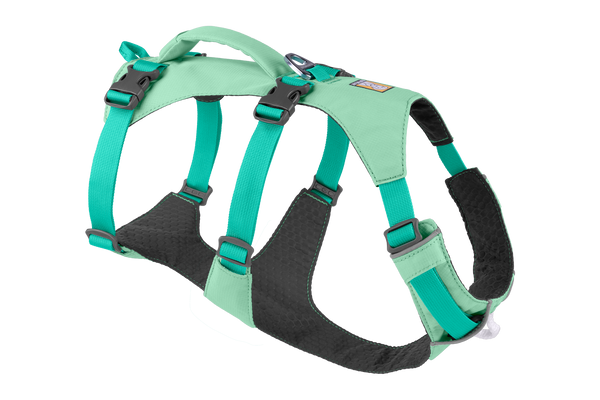
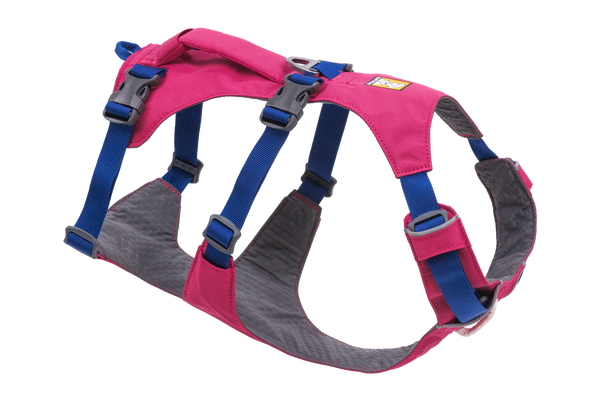
These teams are often alone in the backcountry for days at a time together, tracking everything from bumblebees to animal scat. Their work requires gear they can count on — gear like the Web Master™ Harness. It’s made to withstand wear and tear, while dogs navigate dense brush, and bright colors keep them visible in the thick overgrowth. The padding and lightweight fit are ideal for long days in the field, providing comfort so that dogs can stay focused on the task at hand. The padded handle allows teams to assist the dogs over challenging terrain.
And Ruffwear learns from them, too, testing and iterating based on their experiences in the field with the harness. It’s through these partnerships that we can build gear that empowers the connection between dogs and their humans — no matter how it’s put to use.
The Original Ruffwear Harness, Redefined.
Since its inception, the Web Master™ has been the trusted harness of working dog teams, from conservation detectors, to avalanche rescuers, to service dogs. We’ve built a harness that after nearly three decades in the field, continues to deliver unwavering durability, security, and comfort — performing just as well for working dogs as it does for everyday use.
The first harness in our line is still blazing trails today. The fully redesigned Web Master™ is now our first harness for head-shy dogs, featuring a new neck buckle that eliminates the need to go over the dogs’s head. We’ve also updated the chest panel to feature a new front leash attachment point.
These innovations are the direct result of our long-standing partnership with working dogs, like conservation detection teams. Their heavy usage of the Web Master™ in demanding environments allow us to design from a dog’s perspective, and to understand and iterate on their needs.
See The New Harness

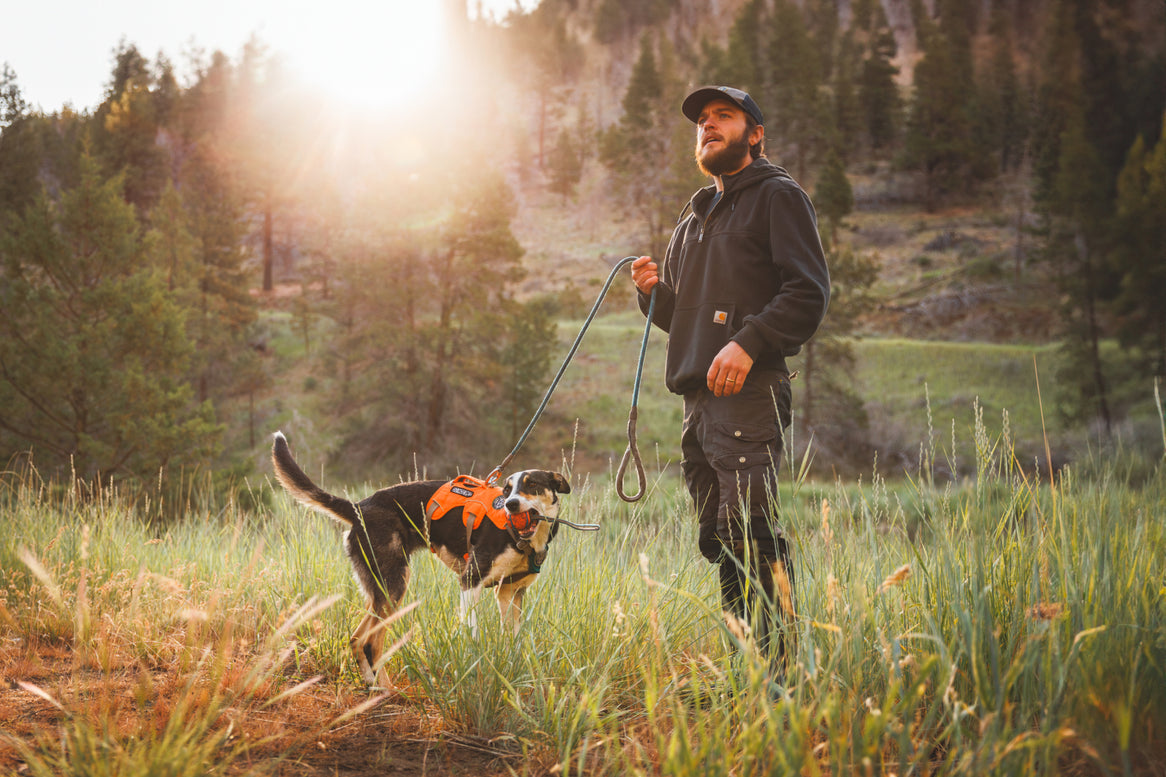
“ What excites us most is seeing our peers and colleagues from around the world adopting the Web Master™ Harness. It’s a testament to Ruffwear’s dedication to creating high-quality gear — making it a trusted choice in our field. ”
Jennifer Hartman, Co-Founder of Rogue Detection Teams-

The Web Master™ Harness
Proven over two decades in the field, The Web Master™ carries on a legacy of delivering durability and comfort without restricting movement – now with a front leash attachment point and a neck buckle.

Conservation Dog Stories
-

Behind the Redesign: The New Web Master™ Harness
See the exciting 2025 updates to our first-ever harness, the Web Master™.
-
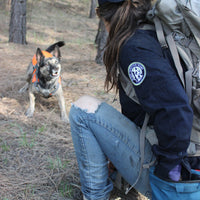
Let's Go Find It: A Day In The Life
Rogue Detection Teams bring the conservation detection dog method to the forefront of scientific research. Here's a day in the field with one team, Suzie and Skye.
-
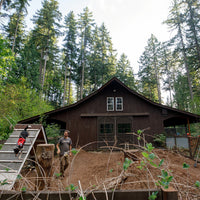
From Shelter To Science
The story of an organization that rescues high-energy dogs from shelters and pairs them with human handlers, where they are trained and equipped to collect data to help researchers..